
6 Well-Known AI Tools for Veterinary Care in 2026
Explore six AI tools for veterinary care—from X-ray screening and digital microscopy to clinical notes and pet symptom triage—plus safety tips.
Suggested URL slug: /ai-tools-veterinary-care/
Primary keyword: AI tools for veterinary care
Secondary keywords: veterinary AI tools, veterinary AI software, AI veterinary radiology, veterinary AI scribe, veterinary diagnostic tools
By: Manus AI
Last updated: October 18, 2026
Publisher handoff—remove this note before publishing: Google’s AdSense guidance emphasizes original, useful content, clear navigation, and a good page experience. Search guidance also favors people-first information and descriptive, non-spammy image alt text. This article includes original explanatory copy, linked sources, and original optimized images, but no individual article can guarantee AdSense approval; the complete site must meet Google’s policies. Have a licensed veterinarian review clinical statements before publication, and identify authors or reviewers truthfully.
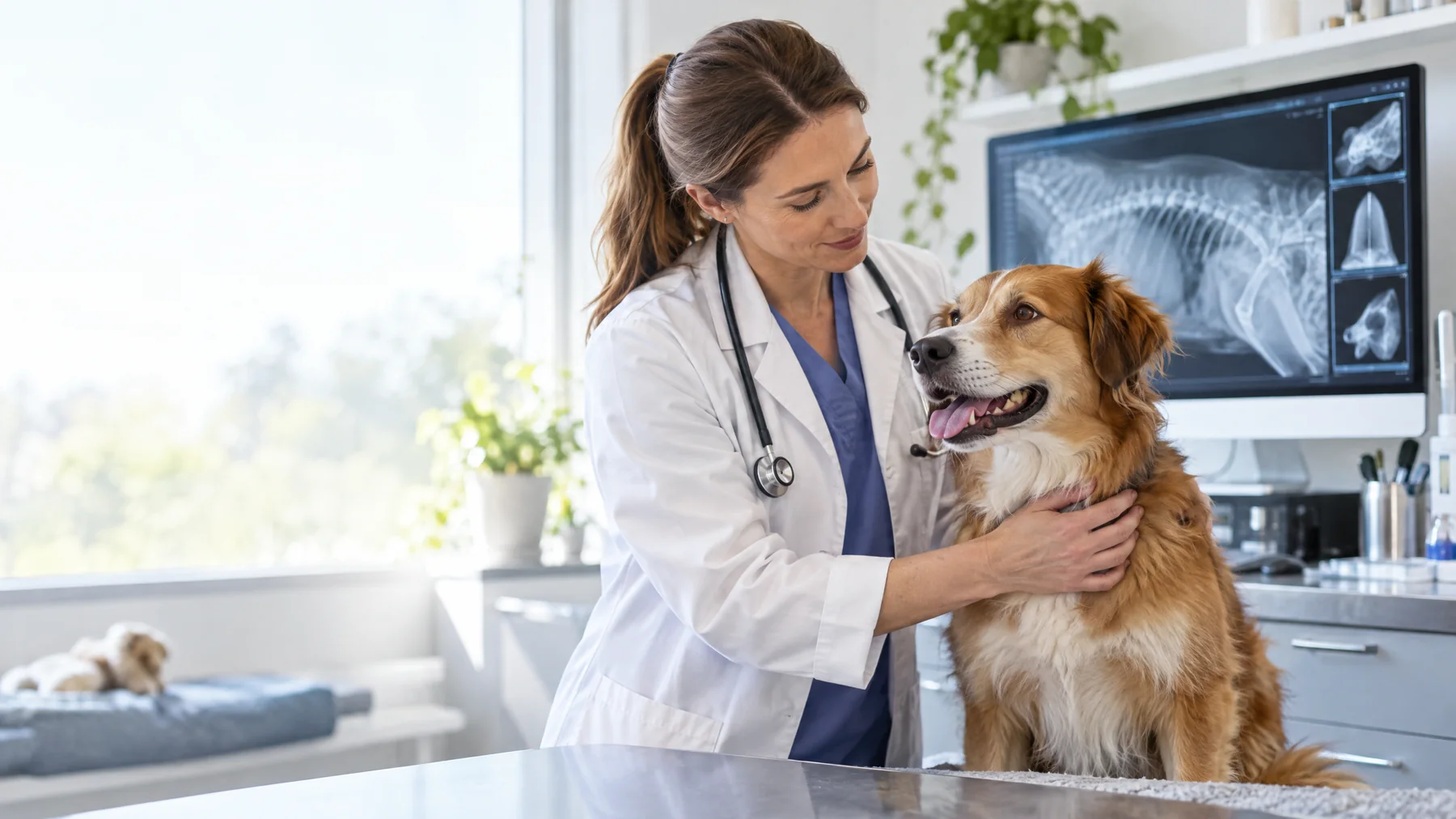
Illustrative image generated for this article. It does not show a real patient or a commercial product interface.
Artificial intelligence is becoming part of everyday veterinary workflows. Depending on the product, it may help a clinician screen radiographs, review microscope images, draft medical notes, or help a pet owner understand how urgently to contact a clinic. These tools solve different problems, so there is no single product that is “best” for every practice.
The six examples below are a representative overview of commercially visible veterinary AI products, not a sales ranking or endorsement. Product features and availability can change, and capabilities described by a manufacturer should be read as vendor claims unless independently validated.
1. SignalPET 360°: AI-assisted veterinary radiology
Clinics comparing these services should distinguish an AI-generated report from a signed interpretation by a veterinary radiologist. SignalPET lists radiologist reports as a separate service. Its published turnaround times and screening capabilities are company specifications, not a guarantee of diagnostic performance for every patient or image.
2. Vetology AI: canine and feline X-ray screening
The distinction between screening and diagnosis matters. Vetology’s own product information says the veterinarian remains responsible for interpreting the report, building differentials, and choosing a treatment plan. Practices evaluating any radiology AI should ask for condition-level validation information and determine whether the published results apply to their own species, image quality, equipment, and patient population.
3. Zoetis VETSCAN IMAGYST: AI-supported digital microscopy
This category differs from radiology tools: it focuses on scanned laboratory samples and microscope images rather than interpreting X-rays. Clinics should confirm which applications are currently offered in their region, what sample preparation is required, which findings are covered, and when a pathologist or reference laboratory review is appropriate. A result from an AI-assisted application still needs to be interpreted in the context of the animal’s history, examination, and other test results.
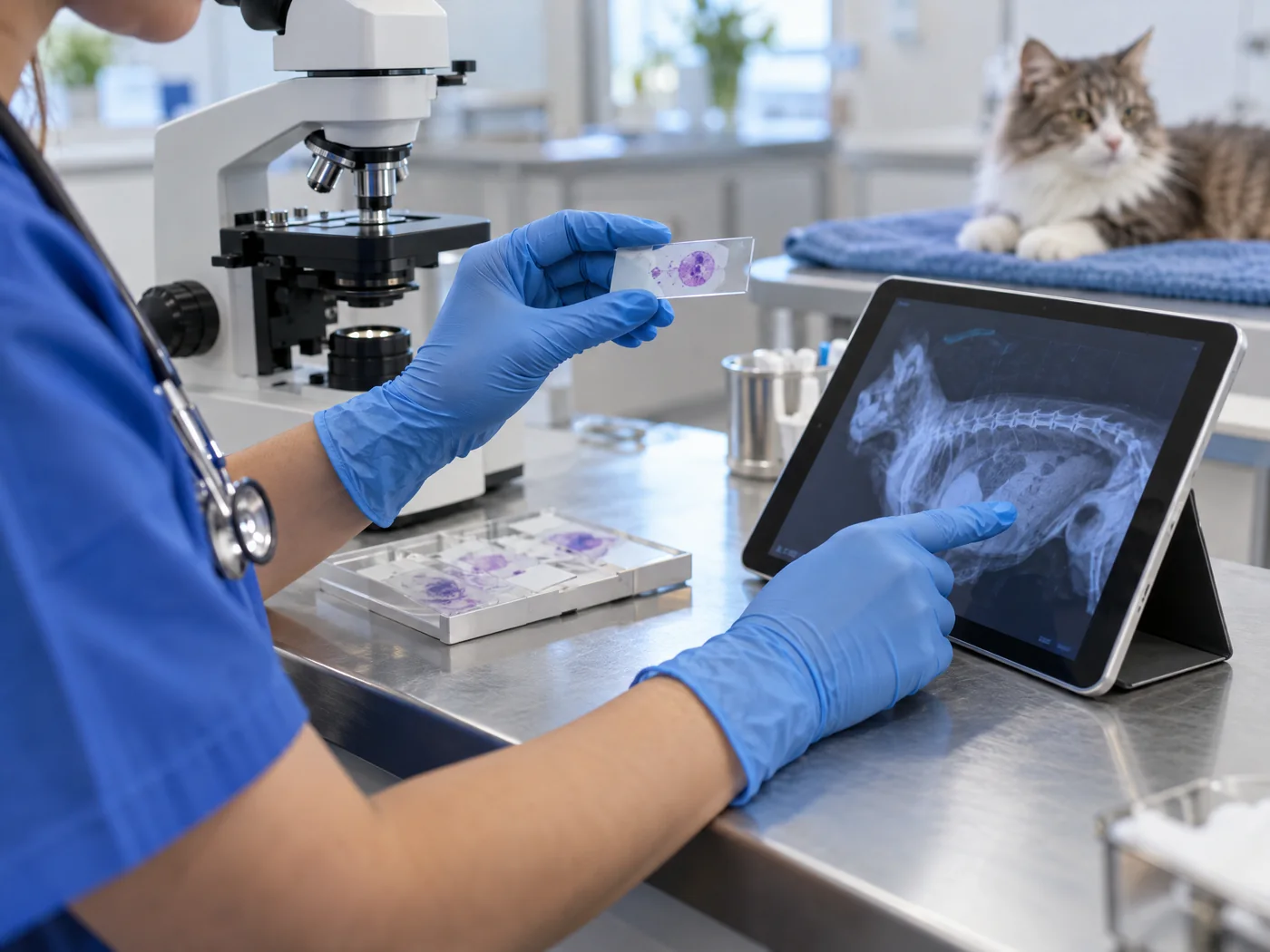
Illustrative image generated for this article; it is not a VETSCAN IMAGYST device or a real clinical case.
4. Scribble Vet: AI scribe for veterinary records
The University of California, Davis School of Veterinary Medicine announced that it adopted ScribbleVet for use across its clinical facilities and described the tool as a way to support documentation without replacing hands-on medical decision-making. The announcement also says clients in that setting can opt out.
An AI scribe can reduce typing, but its notes are drafts. Before saving or sharing a record, the veterinarian should check names, medications, dosages, dates, clinical findings, and omissions. Practices should also explain recording and data-handling procedures to clients and follow applicable consent, privacy, and record-retention requirements.
5. CoVet: veterinary AI copilot and documentation assistant
CoVet is most relevant to practices seeking documentation and workflow support rather than a dedicated imaging or laboratory analyzer. As with any generative AI system, clinicians should treat generated records and summaries as editable drafts. The tool can organize information, but the clinician must confirm that the output accurately reflects the encounter and does not add unsupported details.
6. Petriage: AI-assisted symptom triage for pet owners
Triage is not diagnosis. Petriage is intended to help users assess urgency and connect with a veterinary practice; it cannot examine an animal or rule out a serious condition. Owners should contact a veterinarian when symptoms are concerning, rapidly worsening, or unclear, and seek emergency care when advised by a professional.
How to choose a veterinary AI tool
Start with the specific task that is creating friction in the clinic. A radiology screening tool, a digital microscopy platform, an AI scribe, and an owner-facing symptom checker are not interchangeable. Match the product to a real workflow rather than buying an AI tool simply because it uses the latest technology.
Before adopting a product, ask the vendor and your clinical team:
•What is the intended use? Confirm the species, image or sample types, clinical setting, and specific outputs the product supports.
•What validation is available? Ask whether performance data are public, condition-specific, based on independent external testing, and relevant to your caseload. Do not rely on an accuracy percentage without its test population and method.
•What happens when the AI is uncertain? Find out whether a case can be escalated to a qualified professional and how urgent cases are handled.
•How will it fit the clinic’s systems? Check compatibility with imaging equipment, laboratory workflows, and practice-management software before purchasing.
•How is information handled? Review data retention, security controls, vendor access, client consent, and whether patient information may be used to train or improve a model.
•Who reviews the output? Set a clear process for checking radiology reports, lab results, transcripts, and client communications before they influence care or become part of the medical record.
Safety, evidence, and the veterinarian’s role
Veterinary radiology organizations ACVR and ECVDI support ethical and transparent AI but say that AI systems should be used with a qualified veterinary professional in the loop. Their position statement calls for transparent methods and datasets, monitoring after deployment, and unbiased third-party evaluation.
Independent evidence also needs to be read carefully. A 2026 pilot study evaluated six commercial veterinary radiology AI platforms using 53 confirmed canine abdominal-radiograph cases. Performance varied, and the authors reported meaningful limitations in the sample they tested. The study is not proof that every product or every use case performs poorly; it is a reminder that a small, defined test cannot establish broad clinical reliability.
A separate 2026 systematic audit of public documentation for 71 commercial veterinary AI products available in North America found that disclosure of validation and performance information was often limited. The study reported a mean unweighted transparency score of 6.4% across its assessed products. That market-wide result should not be treated as the score of any one tool in this article, but it reinforces why clinics should request evidence and read the fine print.
AI should therefore be treated as decision support, not as an autonomous veterinarian. The clinician must weigh the output against the examination, history, test quality, and the animal’s overall condition. Pet owners should not use a symptom checker or general-purpose chatbot to diagnose or treat an animal without veterinary guidance.
Frequently asked questions
What are AI tools used for in veterinary care?
Depending on the product, they may support radiograph screening, digital microscopy, clinical documentation, record summaries, or symptom triage. The six tools above cover different parts of the workflow rather than performing the same job.
Can AI replace a veterinarian or veterinary radiologist?
No. Professional imaging guidance emphasizes keeping a qualified veterinary professional involved in AI-supported interpretation. AI output is one input into clinical judgment, not a substitute for examination, diagnosis, and treatment decisions.
Are AI veterinary diagnostic tools accurate?
There is no single accuracy figure that applies to all veterinary AI tools. Performance depends on the product, task, species, condition, image or sample quality, and validation method. Ask for independent, condition-specific evidence and confirm that it matches the intended use.
Which veterinary AI tools are intended for pet owners?
Petriage is the owner-facing example in this guide: its symptom checker is designed to help assess urgency and connect with a clinic. SignalPET, Vetology, VETSCAN IMAGYST, ScribbleVet, and CoVet are primarily described as tools for veterinary professionals or clinical workflows.
Bottom line
The most useful AI tool for a veterinary practice depends on the job it needs to do. Imaging platforms such as SignalPET and Vetology focus on radiographs; VETSCAN IMAGYST applies AI to selected microscopy workflows; ScribbleVet and CoVet support records and administration; Petriage helps pet owners assess how urgently to seek veterinary care. Each should be evaluated for its exact use, independent evidence, privacy protections, and review workflow—not just its marketing claims.
Educational notice: This article is a general overview, not veterinary medical advice. It does not diagnose an animal or recommend a treatment. Consult a licensed veterinarian about a pet’s symptoms or care.