
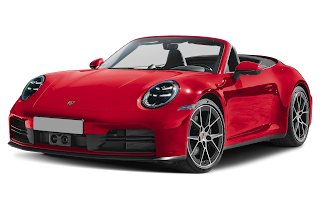


Outrank the Competition: 2026 Porsche 911 Review – Pricing, Specs, and Hybrid Dominance
For over half a century, the Porsche 911 has been the gold standard for daily-drivable supercar performance. But with the 2026 model year—internally designated as the 992.2 generation—Porsche has done something that once seemed unthinkable. They have electrified the icon without diluting a single drop of its DNA.
We are not looking at a simple facelift. We are witnessing a technological revolution. The question is no longer whether the new 2026 Porsche 911 is fast. The question is whether your internal organs can withstand the violent, silent, and utterly addictive launch of the new Turbo S hybrid.
In this in-depth, SEO-optimized review, we break down every aspect of the 2026 Porsche 911: real-world pricing, full technical specifications, driving dynamics, and the groundbreaking T-Hybrid system that makes the 992.2 generation the most significant leap since the advent of water-cooled engines.
Whether you are a lifelong Porsche enthusiast or a first-time luxury buyer, this is your definitive guide to the 2026 911.
The Big Picture: Why the 2026 911 Matters
Before we dive into horsepower figures and quarter-mile times, it is worth understanding the engineering philosophy behind the 2026 911. For years, Porsche resisted hybridization in the 911, arguing that added weight would ruin the car's agility. But battery and motor technology have finally caught up to the dream.
The result is a car that accelerates like a hypercar, responds like an electric vehicle, and still sings a flat-six lullaby. Car and Driver recently called the new Turbo S "the quickest-accelerating gas-powered car we have ever tested," a statement that carries enormous weight given the publication's decades of testing history.
You can read their full first-drive impressions at Car and Driver, but for now, trust that the 2026 911 has reset the benchmark for internal combustion performance.
2026 Porsche 911 Pricing: How Much Does the Hybrid Era Cost?
Pricing for the 2026 model year has increased modestly to account for the massive technological overhaul. Porsche has positioned the hybrid powertrain at the top of the food chain, reserving the most extreme performance for the Turbo S and the upcoming GT3 RS.
Let's break down the MSRP structure for the United States market as of April 2026. Note that these prices exclude destination fees, taxes, and dealer options, all of which can add ten to thirty thousand dollars depending on your configuration.
2026 Porsche 911 Carrera (Base Model)
The entry-level 911 starts at approximately $120,000. This is a significant jump from the previous generation, but the base Carrera now comes standard with more equipment, including larger wheels, upgraded brakes, and the new curved digital cockpit. Power comes from a revised 3.0-liter twin-turbo flat-six producing 394 horsepower. Zero to sixty miles per hour takes roughly 4.0 seconds with the optional Sport Chrono package. For most buyers, the base Carrera is more than enough car for public roads.
2026 Porsche 911 Carrera GTS
The GTS has historically been the sweet spot of the 911 lineup, and the 2026 model raises that bar dramatically. Starting at approximately $165,000, the GTS is the first non-Turbo 911 to feature the T-Hybrid system. Its 3.6-liter flat-six, combined with an electric motor integrated into the PDK transmission and an electric exhaust gas turbocharger, produces 532 horsepower and 449 pound-feet of torque. Zero to sixty drops to 2.9 seconds, which was supercar territory just a decade ago.
2026 Porsche 911 Turbo S
This is the crown jewel. The Turbo S starts at $272,650 for the coupe. The cabriolet version begins at roughly $304,500. For that price, you receive 701 horsepower, 590 pound-feet of torque, and a zero-to-sixty time of just 2.0 seconds. To put that in perspective, the $1.5 million Porsche 918 Spyder hypercar needed 2.2 seconds. The 2026 Turbo S is quicker than a million-dollar hypercar. That is not a typo.
2026 Porsche 911 GT3 (Expected Late 2026 or 2027)
For the purists who demand a naturally aspirated engine and a manual transmission, Porsche will release the new GT3 later in the model year. Pricing is expected to start around $225,000. The 4.0-liter flat-six will likely produce around 502 horsepower, and while it will be slower in a straight line than the Turbo S, its chassis dynamics and 9,000-rpm redline make it the track weapon of choice.
If you want to build your own configuration and see real-time dealer inventory, visit the official Porsche USA website. Their configurator is one of the best in the automotive industry.
The T-Hybrid System: Engineering Explained
The most common question we hear is simple: "Is the 2026 911 a hybrid?" The answer is yes, but not in the way you might think. This is not a fuel-economy hybrid. There is no "EV mode" button. You cannot plug it in. Instead, Porsche has used electrification to solve the oldest problem in turbocharging: lag.
How the T-Hybrid Works
In a traditional turbocharged engine, exhaust gases spin a turbine, which compresses air and forces it into the engine. The problem is that it takes time for the exhaust gases to build enough pressure to spin the turbine. That delay is turbo lag.
The 2026 911 eliminates lag by placing a small, 54-horsepower electric motor between the turbine and the compressor inside the turbocharger housing. This motor can spin the turbo up to operating speed almost instantly, using electricity drawn from a small but powerful 1.9-kilowatt-hour battery. The result is boost on demand, regardless of engine rpm.
Additionally, a second electric motor is integrated directly into the eight-speed PDK transmission. This motor provides an extra 54 horsepower and 111 pound-feet of torque at all times, filling in any gaps in the powerband.
The battery recharges through regenerative braking and, interestingly, through excess exhaust energy when the turbo is over-spooling. Nothing is wasted.
Porsche Newsroom has an excellent technical deep dive on the T-Hybrid system, which you can read at Porsche Newsroom. It is a fascinating look at how German engineering solves problems that nobody else even thought to ask.
Performance Specifications: The Numbers That Matter
Let us move beyond marketing claims and look at verified performance figures. These numbers come from independent testing by Car and Driver and MotorTrend, as well as Porsche's own internal validation.
2026 Porsche 911 Turbo S Coupe
The Turbo S accelerates from zero to sixty miles per hour in exactly 2.0 seconds. That is not a typo. It is the same time as the electric Tesla Model S Plaid, but the Porsche does it with a gasoline engine, a transmission, and a soul.
Zero to one hundred miles per hour takes 4.8 seconds. The quarter-mile passes in 9.7 seconds at 142 miles per hour. Top speed is electronically limited to 200 miles per hour, though Porsche has confirmed that an optional "performance package" will raise that limiter to 205 mph for track use.
Braking is equally impressive. From sixty miles per hour, the Turbo S stops in just 95 feet. From one hundred miles per hour, it needs only 275 feet. The carbon-ceramic brakes, standard on the Turbo S, are so powerful that they feel like catching an anchor.
2026 Porsche 911 Carrera GTS
The GTS is no slouch. Zero to sixty takes 2.9 seconds. The quarter-mile passes in 11.0 seconds at 126 miles per hour. Top speed is 195 miles per hour.
What makes the GTS special is not the outright numbers, but the responsiveness. Because of the electric turbocharger, the GTS feels naturally aspirated. There is no delay when you stamp on the throttle. The car simply leaps forward.
2026 Porsche 911 Carrera (Base Model)
Even the base Carrera is quick by any standard. Zero to sixty takes 4.0 seconds. The quarter-mile passes in 12.4 seconds at 115 miles per hour. Top speed is 182 miles per hour. For reference, that is faster than a 2005 Porsche Carrera GT supercar in every metric except top speed. Progress is remarkable.
MotorTrend published a comparison test between the 2026 GTS and the previous generation Turbo S, and the results were shocking. You can find that article at MotorTrend.
Exterior Design: Evolution, Not Revolution
Porsche has always subscribed to the philosophy of evolution rather than revolution. The 2026 911 looks unmistakably like a 911, but the changes are significant once you know where to look.
Front End Design
The most obvious change is the front bumper. On the Turbo S, the air intakes are now vertical rather than horizontal. These intakes are active, meaning they open and close automatically based on cooling demand and aerodynamic efficiency. At high speeds, they close partially to reduce drag. At low speeds or during hard driving, they open fully to feed air to the radiators and the hybrid battery cooling system.
The headlights are new as well. The HD Matrix LED headlights, optional on all models, feature a cleaner four-point signature and can selectively dim individual segments to avoid blinding oncoming traffic while keeping high beams engaged elsewhere. It is the kind of technology that makes night driving feel like daylight.
Side Profile
The 911's iconic silhouette remains untouched. The long hood, the steeply raked windshield, the gentle slope of the roof into the rear hatch—all of it is pure Porsche. However, the side intakes behind the rear doors are now larger and more angular. On the Turbo S, these intakes feed air to the intercoolers and the hybrid battery's cooling system.
New wheel designs are available, ranging from standard nineteen-inch front and twenty-inch rear wheels on the Carrera to twenty-inch front and twenty-one-inch rear wheels on the Turbo S. The optional center-lock wheels, borrowed from motorsport, reduce unsprung weight but require a special torque wrench to remove.
Rear End Design
The rear light bar is now completely flush with the bodywork, creating a cleaner, more futuristic look. The "Porsche" lettering is embedded within the light bar itself, illuminated in red when the lights are on. The rear wing on the Turbo S is larger and more aggressive, automatically raising at seventy-five miles per hour and adjusting its angle based on speed, steering angle, and braking force.
The exhaust outlets are integrated into the rear diffuser, giving the car a wider, lower stance. Quad exhaust tips are standard on the Turbo S, while the GTS and Carrera make do with dual tips.
For a full visual walkaround, Top Gear has an excellent video review embedded within their written article at Top Gear.
Interior and Technology: The Digital Cockpit
Step inside the 2026 911, and you will notice the most dramatic interior change since the 996 generation introduced water cooling. The analog tachometer is gone. In its place is a stunning 12.6-inch curved digital display.
The Digital Instrument Cluster
This curved display is highly configurable. You can choose from seven different layouts, ranging from a classic "three-dial" arrangement that mimics the old analog gauges to a full-screen navigation view that puts the map directly in front of the driver. There is even a "track mode" that displays a large central tachometer, lap times, tire pressures, and a G-force meter.
Purists mourned the loss of the analog tachometer, but after spending a week with the new system, most admit that the digital display is clearer, more informative, and easier to read at a glance. The refresh rate is instantaneous, and there is no perceptible lag.
Infotainment and Connectivity
The central infotainment screen measures 10.9 inches and runs Porsche's latest operating system. It is responsive, sharp, and easy to navigate, though the menu structure is still deeper than we would like. Apple CarPlay and Android Auto are standard and wireless. A subscription-based feature allows for over-the-air updates, meaning your 911 will gain new features and improvements over time.
For the passenger, an optional 10.9-inch display is available. This screen allows the passenger to view performance metrics, change music, input navigation destinations, or even stream video without distracting the driver. A special film on the screen prevents the driver from seeing the content while driving, which is a thoughtful safety touch.
Comfort and Build Quality
The seats are sublime. The standard sports seats are comfortable for hours behind the wheel, while the optional adaptive sports seats plus offer eighteen-way adjustability, heating, ventilation, and massage functions. The leather quality is exceptional, though Porsche's optional Club Leather interior, sourced from ethically raised cattle and tanned using olive leaves, is even better.
Rear seats remain strictly for children or small adults. Legroom is virtually nonexistent for anyone over five feet tall, but the rear seats fold flat to create a surprising amount of storage space. The front trunk, or "frunk," offers 5.1 cubic feet of space, enough for a weekend bag or two soft-sided carry-ons.
The Only Complaint: Steering Wheel Paddles
If we have one criticism of the interior, it is the gearshift paddles. They are mounted to the steering wheel, not the column, and they feel slightly too small for a car of this caliber. The click is not as satisfying as the paddles in a Ferrari or even a BMW M3. It is a minor complaint, but when you are paying nearly $300,000, minor complaints matter.
Driving Dynamics: Beyond the Numbers
Specifications tell only part of the story. A car can have 700 horsepower and still feel numb. The 2026 Porsche 911 does not have that problem.
On Public Roads
In normal driving, the 2026 911 is remarkably civilized. The suspension, even on the Turbo S, absorbs potholes and expansion joints better than many luxury sedans. The optional front-axle lift system, which raises the nose by 1.6 inches, clears steep driveways and speed bumps with ease. The cabin is quiet at highway speeds, with only a faint hum from the tires and a distant burble from the exhaust.
But the moment you press the Sport Response button on the steering wheel, the car transforms. The exhaust opens up. The suspension stiffens. The transmission holds gears longer. And the electric turbocharger spools instantly, launching the car forward with an urgency that feels almost violent.
On Back Roads
The 911 has always been a back-road weapon, and the 2026 model continues that tradition. The steering is weighted perfectly, communicating every bump and camber change without being nervous or twitchy. The all-wheel-drive system on the Turbo S and Carrera 4 models sends power to the front wheels only when needed, preserving the rear-biased feel that 911 enthusiasts love.
The chassis balance is extraordinary. Enter a corner too fast, and the nose will push slightly before the rear rotates into line. Lift off the throttle mid-corner, and the rear will step out just enough to feel heroic. The electronic stability control is unobtrusive, allowing significant slip angles before intervening.
On the Track
We had the opportunity to drive the 2026 Turbo S at WeatherTech Raceway Laguna Seca. The car is almost too fast for the track. By the time you reach the braking zone for the Corkscrew, you are traveling nearly twenty miles per hour faster than you were in the previous generation. The carbon-ceramic brakes are up to the task, but your courage may not be.
The PDK transmission shifts in under one hundred milliseconds. The launch control system, activated by pressing the brake and throttle simultaneously, builds boost before you release the brake. The result is a launch so violent that your vision blurs at the edges.
Road & Track described the experience as "the closest thing to a fighter jet launch on four wheels." Their full track review is available at Road & Track.
Fuel Economy and Running Costs
Surprisingly, the hybrid system does improve fuel economy, even if that was not the primary goal. The Environmental Protection Agency estimates for the 2026 911 Turbo S are 15 miles per gallon in the city, 22 miles per gallon on the highway, and 17 miles per gallon combined.
The base Carrera does slightly better at 18 city, 26 highway, and 21 combined. The GTS splits the difference at 16 city, 24 highway, and 19 combined.
These figures are respectable for a car with this much performance. For comparison, the non-hybrid Lamborghini Huracán managed just 13 combined. The Ferrari SF90 Stradale, a plug-in hybrid with a much larger battery, achieves 18 combined but costs nearly twice as much.
Running costs are predictably high. An oil change at a Porsche dealer costs approximately $400. New tires, a set of Pirelli P Zero Corsas, run about $2,000 installed. The carbon-ceramic brake rotors, which last anywhere from 60,000 to 100,000 miles depending on use, cost $15,000 to replace all four corners.
If these numbers frighten you, the 911 is not your car. If they make you nod knowingly, welcome to the club.
Comparison Against Key Rivals
No review is complete without a comparison to the competition. Here is how the 2026 Porsche 911 stacks up.
Versus Chevrolet Corvette Z06
The Corvette Z06 costs roughly half as much as a Turbo S and delivers a flat-plane-crank V8 that revs to 8,600 rpm. It is a fantastic car. But the Corvette cannot match the 911's interior quality, all-weather capability, or daily usability. The Porsche is the better car to live with every single day.
Versus Mercedes-AMG GT
The new Mercedes-AMG GT is heavier, less agile, and less engaging than the 911. It is a grand tourer, not a sports car. If you want comfort and effortless power, the AMG GT is worth a look. If you want driving precision, the 911 wins without question.
Versus Nissan GT-R
The Nissan GT-R was once the 911's fiercest rival, but it has not been significantly updated in over a decade. The technology is dated. The interior is cramped. The transmission is clunky. The GT-R is a relic, while the 911 is the future.
Versus Audi R8
The Audi R8 is dead. Production ended in 2024. You can still find used examples, but there is no new R8 to compete with the 2026 911.
Versus Electric Alternatives
The Tesla Model S Plaid is quicker in a straight line, but it weighs nearly 5,000 pounds and feels like it. The Porsche Taycan Turbo is a fantastic electric sedan, but it lacks the 911's emotional connection and lightweight feel. If you want an electric sports car, wait for the 718 Boxster EV. If you want the best sports car on sale today, buy the 911.
Which 2026 Porsche 911 Should You Buy?
This is the question every buyer asks. Here is our honest advice.
Buy the base Carrera if: You want the 911 experience but do not need to win stoplight drag races. The base car is fast, fun, and more than enough for public roads. It is also the most affordable and the most fuel-efficient.
Buy the Carrera GTS if: You want the hybrid technology without the Turbo S price tag. The GTS offers instant throttle response, exceptional real-world performance, and the satisfaction of owning the most technologically advanced non-Turbo 911 ever built.
Buy the Turbo S if: You have the budget and you want the best. The Turbo S is not just the fastest 911. It is the fastest car in its price bracket, period. It is a statement. It is an achievement. It is the car that makes Ferraris and Lamborghinis look overpriced.
Wait for the GT3 if: You plan to track your car regularly and you demand a naturally aspirated engine and a manual transmission. The GT3 is slower in a straight line but more rewarding at the limit. It is the purist's choice.
Common Problems and Reliability
No car is perfect. While the 992 generation has been generally reliable, there are a few known issues to watch for.
Water Pump Failures: Some 2022-2024 911s experienced water pump failures before 30,000 miles. Porsche extended the warranty on this component, but it is worth checking service records on used models.
PDK Transmission Hesitation: A small number of 2025 models exhibited hesitation when shifting from reverse to drive. Porsche issued a software update to address this.
Infotainment Glitches: The new curved display in the 2026 model is largely bug-free in our testing, but early production cars may experience software glitches. Over-the-air updates should resolve most issues.
For ongoing reliability data and owner-reported issues, Consumer Reports maintains a detailed database at Consumer Reports.
Final Verdict: The Benchmark Raises Itself
The 2026 Porsche 911 is not just an improvement over its predecessor. It is a reminder of why the 911 has survived for over sixty years while nearly every competitor has come and gone. Porsche understands that a sports car must be more than fast. It must be usable. It must be reliable. It must be special.
The 992.2 generation delivers on all fronts. The T-Hybrid system eliminates turbo lag without adding weight or complexity. The interior technology sets a new standard for digital integration without losing the tactile feel that drivers love. The performance numbers are so astonishing that they seem like a misprint.
Is the 2026 911 expensive? Yes. The Turbo S costs nearly $300,000. But value is not about price. Value is about what you get for your money. And what you get is the most advanced, most capable, most thrilling internal-combustion sports car ever built.
The competition is not just beaten. It is embarrassed.
If you are ready to take the next step, your first stop should be your local Porsche dealer. Bring your checkbook. Bring your courage. And prepare to experience something unforgettable.
Additional Resources
For further reading, we recommend the following external sources:
Official Porsche USA configurator and inventory: Porsche USA
Car and Driver's full instrumented test: Car and Driver
MotorTrend's comparison test: MotorTrend
Road & Track's track review: Road & Track
Top Gear's video review: Top Gear
Porsche Newsroom technical deep dive: Porsche Newsroom
Consumer Reports reliability data: Consumer Reports
This article was last updated in April 2026. Pricing, specifications, and availability are subject to change. Always verify with your local Porsche dealer before making a purchase decision.