
What is the reason behind Google Maps' preference for the longest route over the shortest one? The key you must understand

When deciding to get from one place to another, most drivers turn to Google Maps, the preferred navigation app for this purpose. This is not surprising, because it has proven itself as one of the most complete devices, offering a wide range of functions that facilitate your daily trips.

Not only does it provide you with the most accurate directions to your destination, it also provides you with real-time traffic data to avoid traffic jams, warnings about accidents, road closures, and other incidents that may affect your route.
Additionally, you can find nearby points of interest, such as restaurants, gas stations, and shops, allowing you to better plan your stops along the way. It also includes information on public transportation, when you'd rather leave the car and opt for the bus or train.
Despite being the most popular navigation app, you’ve probably noticed that Google Maps doesn’t always take you to the shortest route in terms of distance. This may seem contradictory for such an advanced and reliable app, but there’s a very simple reason behind it.
It is worth noting that Google Maps prioritizes getting you to your destination in the shortest possible time, not necessarily traveling the shortest distance. To achieve this, the application constantly analyzes traffic conditions in real time, using data collected from millions of mobile phones that use it.
This information allows us to identify traffic jams, accidents, and any other slowdowns on the roads. Algorithms analyze all this information to calculate the optimal route, which may not necessarily be the shortest, but the one that will allow you to reach your destination in the shortest possible time.
In other words, Google Maps prioritizes your time and convenience over saving a few miles. For example, a route that seems the most direct and shortest may be congested due to an accident or road construction, causing you to waste a lot of time.
On the other hand, a longer route, but with less traffic, will allow you to reach your destination in less time. In addition, other factors may play a role. For example, the app may take into account your driving habits, such as avoiding tolls, or even the type of car.
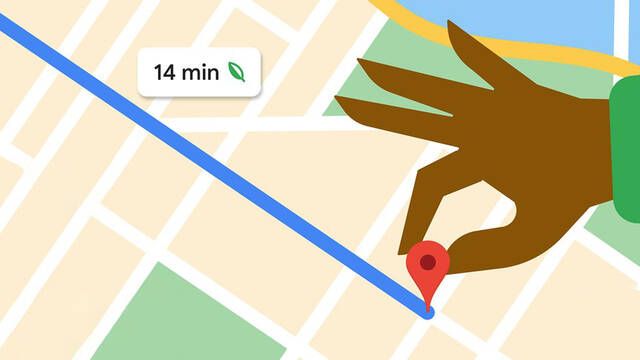
It can also take into account the time of day and day of the week, as traffic can vary greatly based on these factors. While it can sometimes be frustrating to not take the most direct and shortest route, it is important to understand that Google Maps is based on a comprehensive analysis of multiple factors.
The app aims to give you the best possible driving experience, taking into account not only distance but also time, traffic, and your personal preferences. The goal is to get to your destination without setbacks and in the shortest possible time.